
FAQ: Animal‑Resistant Metal Enclosures for Safe Outdoor Storage
What is an animal‑resistant metal enclosure?
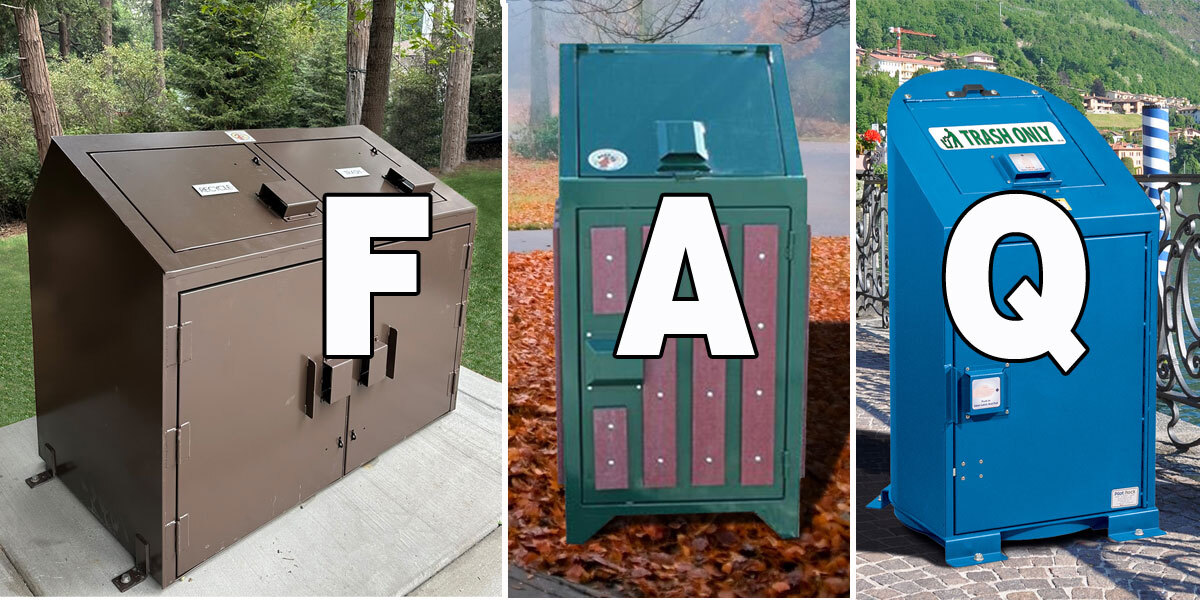
An animal‑resistant metal enclosure is a secure, outdoor storage structure—typically made from heavy‑gauge steel or aluminum—designed to protect trash cans, recycling bins, and other attractants from wildlife. These enclosures use reinforced walls, rigid metal lids, and secure latch systems to prevent bears, raccoons, coyotes, rodents, and other animals from accessing the contents inside.
Why are metal enclosures better than plastic or wooden alternatives?
Metal enclosures offer several advantages:
- Strength & durability: Bears can crush, bite, or tear through plastic and wood. Metal resists these forces.
- Rigid lids: Prevent bending or prying—one of the most common failure points in plastic systems.
- Weather resistance: Metal withstands snow loads, UV exposure, and long-term outdoor use.
- Long lifespan: Lower long-term cost due to reduced breakage and replacement.
How do these enclosures deter bears and other wildlife?
Animal-resistant metal enclosures work by removing the reward and blocking access:
- No scent escape: Tight seals and rigid construction reduce odors that attract wildlife.
- Protected latch systems: Bears are smart and strong, but properly designed paddle latches or recessed locking mechanisms prevent them from opening the enclosure.
- No leverage points: Smooth metal surfaces and reinforced corners eliminate pry points.
- Behavioral conditioning: When animals repeatedly fail to access food, they stop returning to the area.
Why should homeowners use animal‑resistant metal enclosures?
Homeowners benefit from:
- Fewer wildlife encounters: Reduces the risk of bears or raccoons roaming near homes.
- Cleaner property: No more scattered trash or damaged bins.
- Compliance: Many regions require bear‑resistant storage in high‑conflict zones.
- Safety: Prevents dangerous situations for families, pets, and neighbors.
Why are these enclosures important for HOAs and residential communities?
HOAs and neighborhoods adopt metal enclosures because:
- One weak link affects everyone: If one household’s trash is accessible, it attracts wildlife to the entire community. This is why many towns have bear-resistant container requirements.
- Uniform compliance: Enclosures create consistent standards and reduce enforcement issues.
- Aesthetics: Metal enclosures can be color‑matched or styled to maintain neighborhood's appearance.
- Reduced liability: Prevents wildlife incidents that could lead to property damage or safety concerns.
Why should parks, campgrounds, and public facilities use them?
Public spaces face higher wildlife pressure and benefit from:
- Visitor safety: Prevents dangerous bear encounters near trails, picnic areas, and campgrounds.
- Operational efficiency: Less cleanup, fewer damaged bins, and reduced staff time.
- Wildlife protection: Keeps animals from becoming food‑conditioned, which often leads to relocation or euthanasia.
- Regulatory alignment: Many wildlife agencies and BearWise guidelines recommend or require certified bear‑resistant solutions.
Do metal enclosures actually prevent bears from getting inside?
Yes—when properly designed and certified.
High‑quality metal enclosures:
- Use reinforced steel or aluminum
- Feature protected latch systems that bears cannot manipulate
- Are tested to withstand pushing, pulling, biting, and prying
- Meet or exceed IGBC (Interagency Grizzly Bear Committee) standards for bear resistance
These systems have been proven effective in residential neighborhoods, national parks, and high‑conflict wildlife zones. Recommended Bearicuda bear-resistant metal enclosures: Highlander, Silverback, Telluride and the Acadia
What can be stored inside an animal‑resistant metal enclosure?
Common uses include:
- Household trash cans
- Recycling bins
- Food waste containers
- Pet food or livestock feed
- Outdoor gear or coolers