

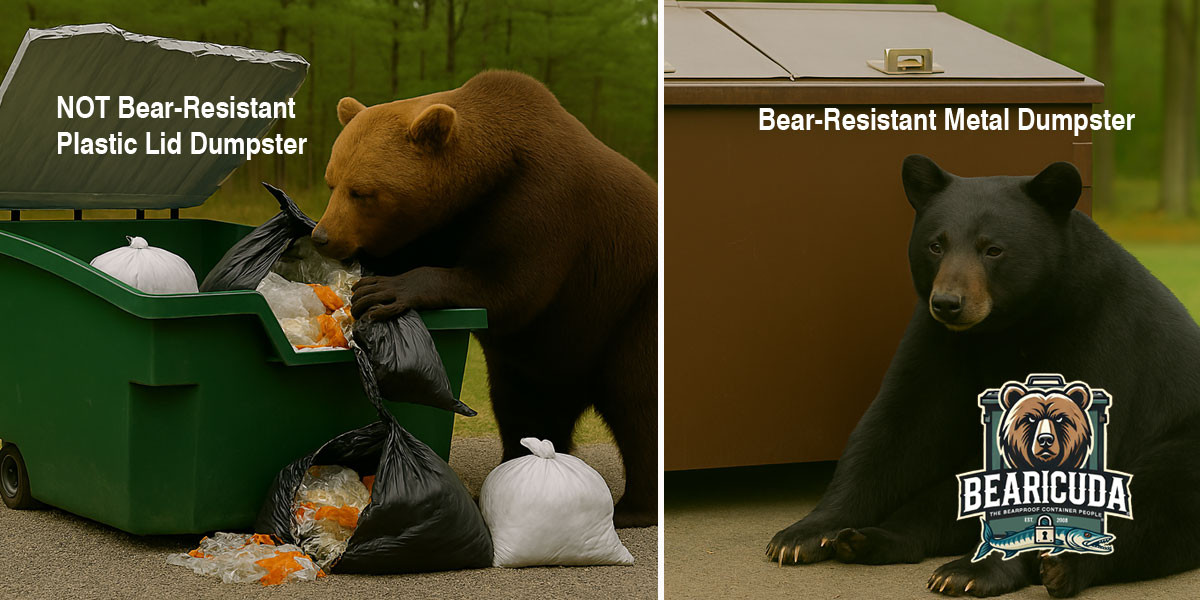
Metal Bear‑Resistant Dumpsters vs. Plastic Lids
Metal Bear‑Resistant Dumpsters vs. Plastic Lids:
Why “Nothing Is Bear‑Proof” Is a Misleading Word Game — and Why Steel Still Wins
When you start researching bear‑resistant dumpsters, you’ll inevitably run into the same line: “No dumpster is bear‑proof.”
Technically, that statement is true. But the way it’s used in marketing often turns a safety reminder into a misleading sales tactic—especially when vendors use it to imply that plastic‑lid dumpsters with a lock bar are “basically the same” as purpose‑built steel bear‑resistant dumpsters.
They aren’t. And the difference isn’t philosophical. It’s engineering.
This guide breaks down the myth, the facts, and the real‑world performance differences that matter when bears are involved.
The Straightforward Answer
- “Bear‑resistant” is the correct term because no certification program can guarantee perfection under every condition (especially human error).
- That disclaimer does not make plastic‑lid dumpsters equal to steel bear‑resistant dumpsters.
- BearWise explicitly states that dumpsters with regular plastic lids (not metal‑reinforced) are NOT bear‑resistant, even if they have a lock bar.
- Wildlife agencies consistently identify flimsy lids—especially premolded plastic—as the primary failure point.
- In real bear country, the safest option is a purpose‑built, all‑metal bear‑resistant dumpster with rigid steel lids and protected latching.
Specific answers to plastic dumpster lids bear-resistance claims:
- What “No Dumpster Is Bear‑Proof” Actually Means
The phrase exists because certification programs like the IGBC must account for:
- Human error (unlatched lids)
- Improper use
- Unpredictable field conditions
But this cautionary language is often twisted into a false equivalence: “If nothing is bear‑proof, then plastic with a lock bar is good enough.”
That’s not what the IGBC means. The IGBC’s own documentation emphasizes that:
- Certification does not guarantee perfection
- Proper use is required
- Construction and materials still determine real‑world performance
In other words: the phrase is a reminder to latch your dumpster—not a statement that all dumpsters perform the same.
- Why Plastic‑Lid Comparisons Fall Apart (Point‑by‑Point)
Rebuttal 1: “If nothing is bear‑proof, plastic with a lock bar is fine.”
Bear resistance depends on:
- Lid rigidity
- Resistance to twisting and peeling
- Structural strength under leverage
- Hardware protection
If the lid flexes, bows, or collapses, the lock bar becomes a partial measure—not a true barrier.
Rebuttal 2: “A lock bar makes a plastic lid bear‑resistant.”
BearWise guidance is unambiguous: Dumpsters with regular plastic lids that are not metal‑reinforced are not bear‑resistant, even if they have a lock bar.
Why? Because bears exploit flex. A lid that bends gives them the gap they need to start a peel.
Rebuttal 3: “Training people is what really matters.”
Training helps—but it cannot compensate for weak construction.
True bear‑resistant designs are engineered to be:
- Hard to misuse
- Hard to pry
- Hard to deform
- Hard to peel
Rigid steel lids and protected latches reduce the consequences of small mistakes.
Rebuttal 4: “Plastic lids only fail when someone leaves them open.”
Agency guidance contradicts this. Wildlife managers repeatedly warn that:
- Premolded plastic lids
- Light‑gauge steel lids
- Urban‑style dumpster lids
…are not designed to stop bears. Bears routinely exploit lid weakness even when everything is latched.
- Myth vs. Fact: Quick Reference Table
|
Myth |
Fact |
|
“No dumpster is bear‑proof, so design doesn’t matter.” |
“Bear‑resistant” language accounts for real‑world use. Engineering still determines whether a bear can pry, bend, or exploit gaps. |
|
“A lock bar makes any plastic‑lid dumpster bear‑resistant.” |
BearWise: regular plastic lids (not metal‑reinforced) are not bear‑resistant even with a lock bar. |
|
“Plastic lids are equal to steel lids if you hold them down.” |
Holding down a lid ≠ preventing flex and peel. Rigidity is what stops leverage‑based attacks. |
|
“If a vendor says ‘bear‑proof is a fantasy,’ steel isn’t worth it.” |
The opposite: because mistakes happen, you want the strongest system that stays secure under pressure. |
- Design Category Comparison: Where Plastic Fits and Where Steel Is the Safer Choice
Not every site faces the same bear pressure. But in high‑pressure environments—especially grizzly country—steel wins for a reason.
|
Category |
What It Is |
Where It Works |
Where It Fails |
|
All‑metal bear‑resistant dumpster (steel body + steel lids) |
Rigid steel lids, protected latch points, minimal pry gaps |
Best choice for bear country, parks, campgrounds, restaurants, remote sites |
Requires proper latching; higher cost/weight, but built for force |
|
Poly dumpster with metal‑reinforced lid + strong closure |
Poly body + truly metal‑reinforced lid |
Lower‑pressure sites; corrosion‑sensitive environments |
Performance varies by reinforcement quality; verify testing |
|
Poly dumpster with regular plastic lid + lock bar |
Standard plastic lid held down by a bar |
Low‑pressure wildlife areas (not serious bear country) |
BearWise: regular plastic lids are not bear‑resistant; flex/peel failures are common |
- The IGBC Reality Check: Don’t Debate Semantics—Ask for Proof
If a vendor leans on the phrase “technically nothing is bear‑proof,” skip the debate and ask:
Is this exact product and configuration IGBC‑certified bear‑resistant?
The IGBC:
- Tests or technically evaluates products
- Updates its certified list regularly
- Requires annual verification
As of the IGBC Certified Products List (Dec 17, 2025), Plastic mfg companies do not appear on the list. That doesn’t imply intent—but it does mean buyers should request:
- Testing documentation
- Reinforcement details
- Certification evidence
If none is provided, treat the product as unproven.
- Why Steel Lids Are the Decisive Feature in Real Bear Country
Bears don’t test dumpsters gently. They:
- Apply upward leverage
- Twist corners
- Slam lids
- Exploit tiny gaps
This is why lid rigidity is the single most important feature.
BearWise and U.S. Forest Service guidance consistently highlight:
- All‑metal lids
- Metal‑reinforced plastic lids
- Protected closures
…and warn that premolded plastic lids and flimsy construction are not designed to stop bears.
- Real‑World Owner Experience
One Bearicuda owner reports that their all‑steel dumpster with 10‑ and 12‑gauge steel lids has remained secure through multiple seasons of grizzly activity—despite repeated attempts.
This isn’t a universal claim; it’s a real‑world example that reinforces the engineering principle:
The more rigid the lid and the more protected the closure, the harder it is for a bear to gain leverage.
FAQ
Is “bear‑proof” a real certification term?
No. Agencies use “bear‑resistant” because no product can guarantee perfection under every condition.
Do lock bars help?
Yes—but only when paired with a lid that doesn’t flex. Regular plastic lids are not bear‑resistant even with a lock bar.
What’s the #1 feature to prioritize?
Lid rigidity + protected latching. If the lid flexes, the closure system is compromised.
What if a vendor won’t provide certification or testing details?
Treat the product as unverified and choose a purpose‑built, all‑metal bear‑resistant dumpster if you’re in real bear country.
Conclusion
“Technically nothing is bear‑proof” should remind users to latch their dumpsters—not serve as a loophole to market weaker designs as equivalent.
Wildlife guidance is clear:
- Regular plastic lids are not bear‑resistant
- Premolded plastic lids are not designed to stop bears
- Rigid steel lids and protected closures consistently outperform flexible materials
If you’re in serious bear country, the safest, lowest‑risk choice is a purpose‑built, all‑metal bear‑resistant dumpster engineered to withstand real bear pressure—not just pass a marketing claim.
Metal Bear Resistant Dumpsters vs. Plastic Lids:
Why “Nothing Is Bear Proof” Is a Misleading Word Game — and Why Steel Still Wins
When you start researching bear-resistant dumpsters, you’ll inevitably run into the same line: “No dumpster is bear-proof.” Technically, that statement is true. But the way it’s used in marketing often turns a safety reminder into a misleading sales tactic—especially when vendors use it to imply that plastic lid dumpsters with a lock bar are “basically the same” as purpose built steel bear resistant dumpsters. They aren’t. And the difference isn’t philosophical. It’s engineering. This guide breaks down the myth, the facts, and the real-world performance differences that matter when bears are involved.
The Straightforward Answer
- "Bear‑resistant" is the correct term because no certification program can guarantee perfection under every condition (especially human error).
- That disclaimer does not make plastic‑lid dumpsters equal to steel bear‑resistant dumpsters.
- BearWise explicitly states that dumpsters with regular plastic lids (not metal‑reinforced) are NOT bear‑resistant, even if they have a lock bar.
- Wildlife agencies consistently identify flimsy lids—especially premolded plastic—as the primary failure point.
- In real bear country, the safest option is a purpose‑built, all‑metal bear‑resistant dumpster with rigid steel lids and protected latching.
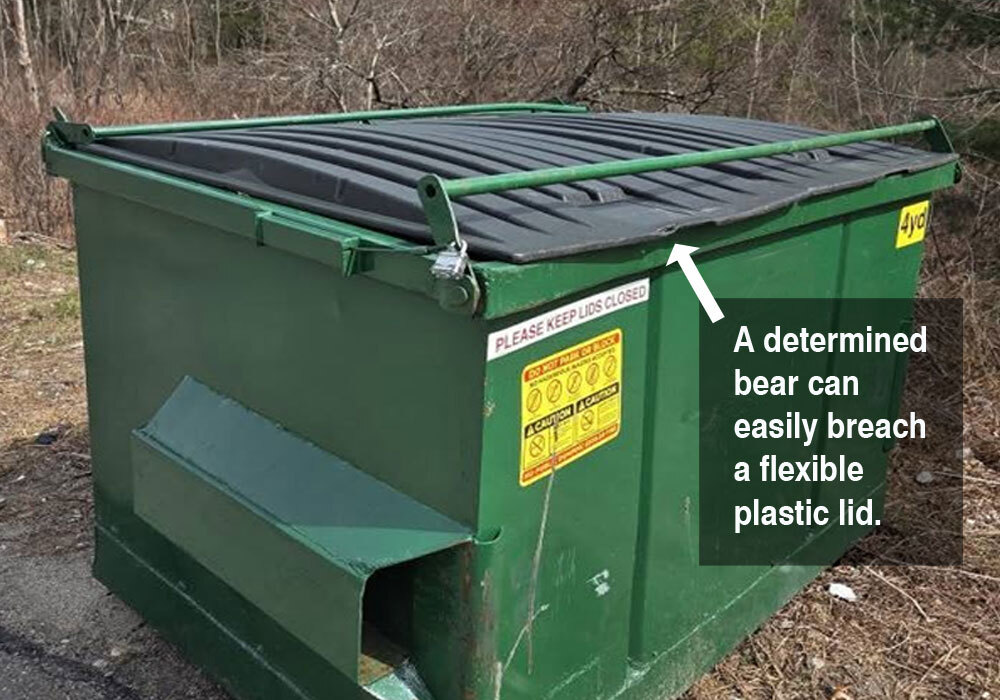
Specific answers to plastic dumpster lids bear-resistance claims:
1. What “No Dumpster Is Bear‑Proof” Actually Means
The phrase exists because certification programs like the IGBC must account for:
- Human error (unlatched lids)
- Improper use
- Unpredictable field conditions
But this cautionary language is often twisted into a false equivalence: “ If nothing is bear‑proof, then plastic with a lock bar is good enough.”
That’s not what the IGBC means. The IGBC’s own documentation emphasizes that:
- Certification does not guarantee perfection
- Proper use is required
- Construction and materials still determine real‑world performance
In other words, the phrase is a reminder to latch your dumpster—not a statement that all dumpsters perform the same.
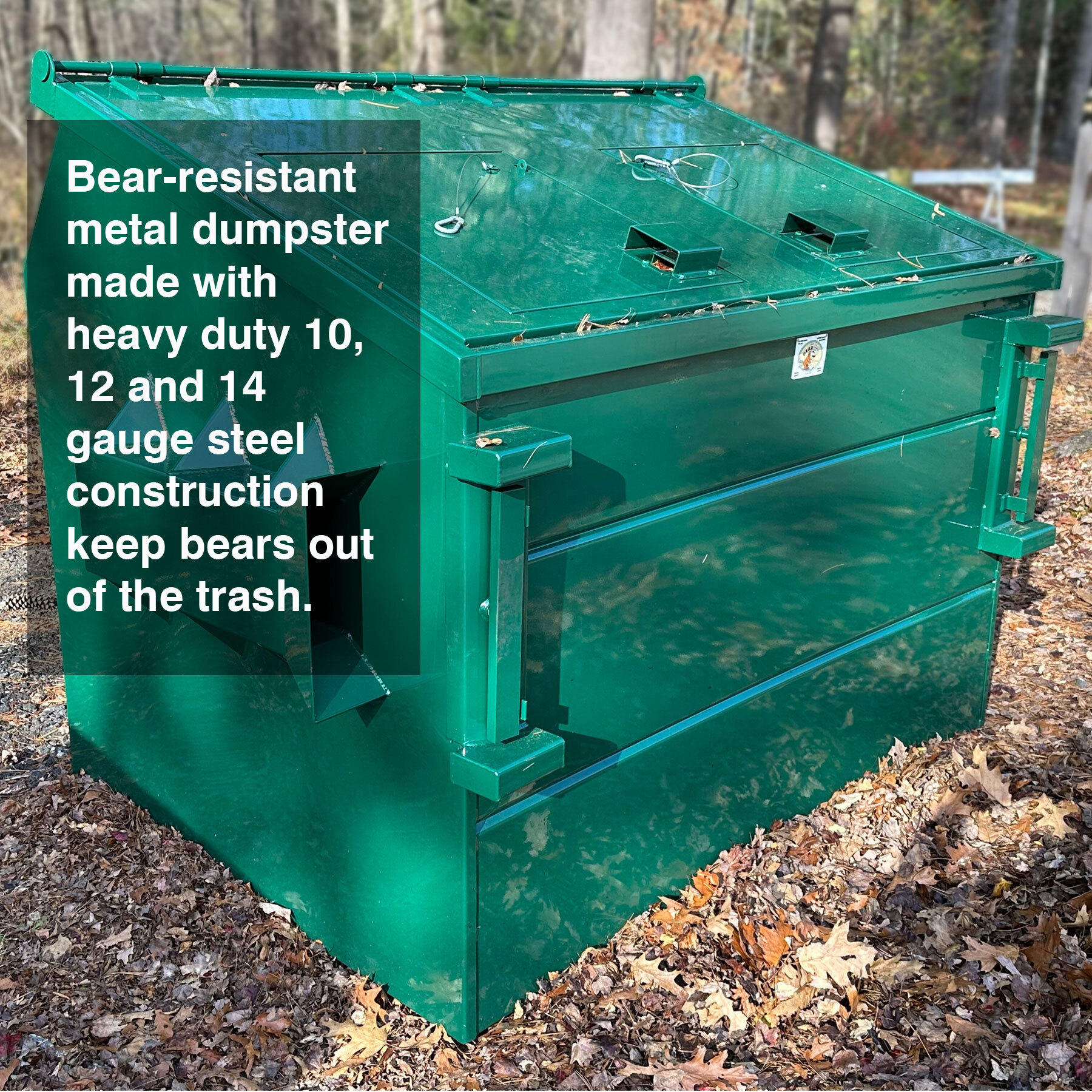
2. Why Plastic‑Lid Comparisons Fall Apart (Point-by-Point)
Rebuttal 1: “If nothing is bear‑proof, plastic with a lock bar is fine.”
Bear resistance depends on:
- Lid rigidity
- Resistance to twisting and peeling
- Structural strength under leverage
- Hardware protection
If the lid flexes, bows, or collapses, the lock bar becomes a partial measure—not a true barrier.
Rebuttal 3: “Training people is what really matters.”
- Hard to misuse
- Hard to pry
- Hard to deform
- Hard to peel
Rigid steel lids and protected latches reduce the consequences of small mistakes.
Rebuttal 2: “A lock bar makes a plastic lid bear‑resistant.”
Dumpsters with regular plastic lids that are not metal‑reinforced are not bear‑resistant, even if they have a lock bar.
Why? Because bears exploit flex.
A lid that bends gives them the gap they need to start a peel.
Rebuttal 4: “Plastic lids only fail when someone leaves them open.”
Agency guidance contradicts this. Wildlife managers repeatedly warn that:
- Premolded plastic lids
- Light‑gauge steel lids
- Urban‑style dumpster lids
…are not designed to stop bears. Bears routinely exploit lid weakness even when everything is latched.
3. Myth vs. Fact: Quick Reference Table
MYTH
“No dumpster is bear‑proof, so design doesn’t matter.”
FACT
“Bear‑resistant” language accounts for real‑world use. Engineering still determines whether a bear can pry, bend, or exploit gaps.
“A lock bar makes any plastic‑lid dumpster bear‑resistant.”
BearWise: regular plastic lids (not metal‑reinforced) are not bear‑resistant even with a lock bar.
“Plastic lids are equal to steel lids if you hold them down.”
Holding down a lid ≠ preventing flex and peel. Rigidity is what stops leverage‑based attacks.
“If a vendor says ‘bear‑proof is a fantasy,’ steel isn’t worth it.”
The opposite: because mistakes happen, you want the strongest system that stays secure under pressure.
4. Design Category Comparison: Where Plastic Fits and Where Steel Is the Safer Choice
Not every site faces the same bear pressure. But in high-pressure environments—especially grizzly country—steel wins for a reason.
Category
What It Is
Where It Works
Where It Fails
All‑metal bear‑resistant dumpster (steel body + steel lids)
Rigid steel lids, protected latch points, minimal pry gaps
Best choice for bear country, parks, campgrounds, restaurants, remote sites
Requires proper latching; higher cost/weight, but built for force
Poly dumpster with metal‑reinforced lid + strong closure
Poly body + truly metal‑reinforced lid
Lower‑pressure sites; corrosion‑sensitive environments
Performance varies by reinforcement quality; verify testing
Poly dumpster with regular plastic lid + lock bar
Standard plastic lid held down by a bar
Low‑pressure wildlife areas (not serious bear country)
BearWise: regular plastic lids are not bear‑resistant; flex/peel failures are common
5. The IGBC Reality Check: Don’t Debate Semantics—Ask for Proof
If a vendor leans on the phrase “technically nothing is bear‑proof,” skip the debate and ask:
Is this exact product and configuration IGBC‑certified bear‑resistant?
The IGBC:
- Tests or technically evaluates products
- Updates its certified list regularly
- Requires annual verification
As of the IGBC Certified Products List (Dec 17, 2025), Plastic mfg companies do not appear on the list. That doesn’t imply intent—but it does mean buyers should request:
- Testing documentation
- Reinforcement details
- Certification evidence
If none is provided, treat the product as unproven.
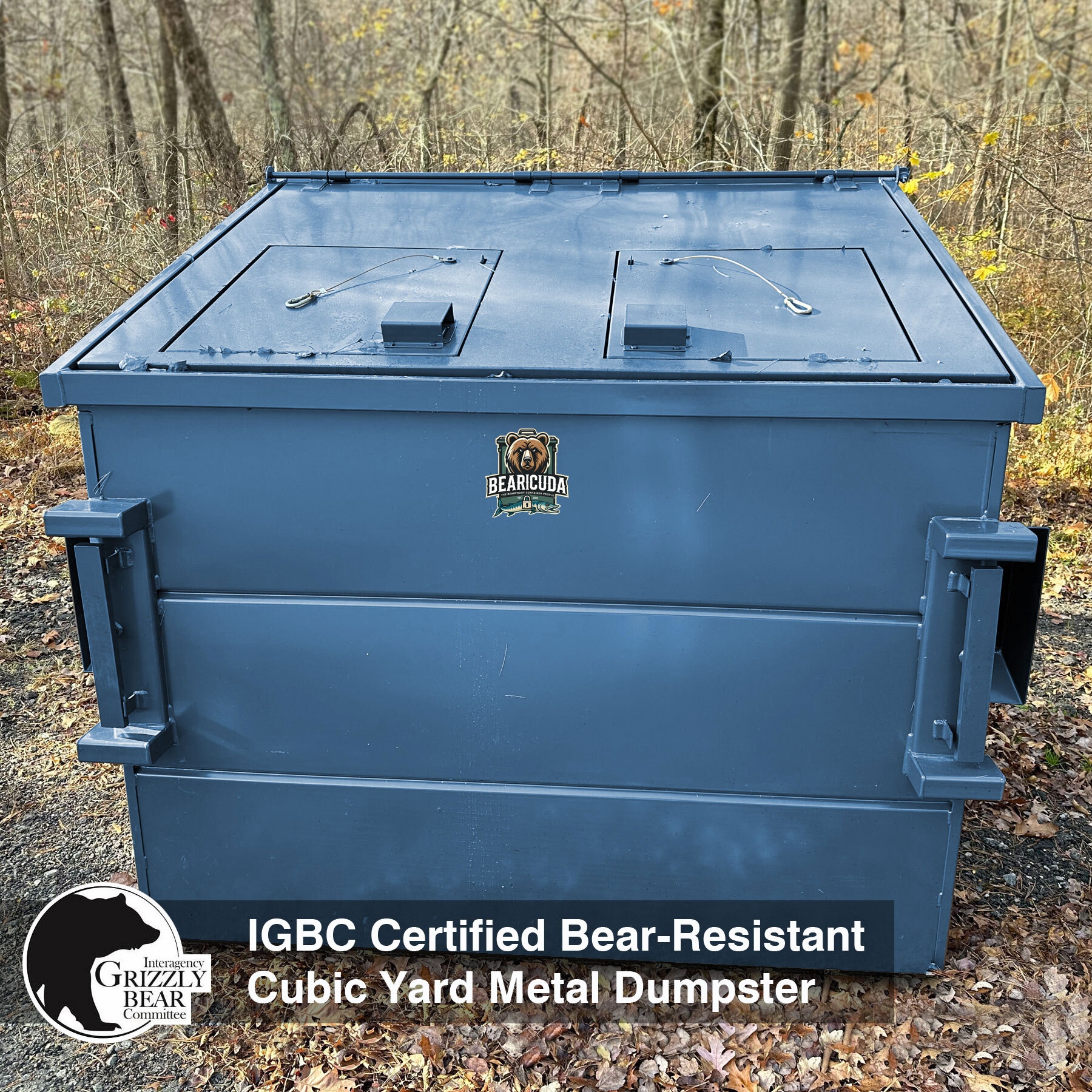
6. Why Steel Lids Are the Decisive Feature in Real Bear Country
Bears don’t test dumpsters gently. They:
- Apply upward leverage
- Twist corners
- Slam lids
- Exploit tiny gaps
This is why lid rigidity is the single most important feature.
BearWise and U.S. Forest Service guidance consistently highlight:
- All‑metal lids
- Metal‑reinforced plastic lids
- Protected closures
…and warn that premolded plastic lids and flimsy construction are not designed to stop bears.

7. Real World Owner Experience
One Bearicuda owner reports that their all-steel dumpster with 10 and 12-gauge steel lids has remained secure through multiple seasons of grizzly activity—despite repeated attempts.
This isn’t a universal claim; it’s a real-world example that reinforces the engineering principle:
The more rigid the lid and the more protected the closure, the harder it is for a bear to gain leverage.
Frequently Aasked Qustions
Is “bear proof” a real certification term?
No. Agencies use “bear-resistant” because no product can guarantee perfection under every condition.
Do lock bars help?
Yes—but only when paired with a lid that doesn’t flex. Regular plastic lids are not bear-resistant, even with a lock bar.
What’s the #1 feature to prioritize?
Lid rigidity + protected latching. If the lid flexes, the closure system is compromised.
What if a vendor won’t provide certification or testing details?
Treat the product as unverified and choose a purpose-built, all-metal bear-resistant dumpster if you’re in real bear country.
Conclusion
“Technically, nothing is bear-proof” should remind users to latch their dumpsters—not serve as a loophole to market weaker designs as equivalent.
Wildlife guidance is clear:
- Regular plastic lids are NOT bear-resistant
- Premolded plastic lids are NOT designed to stop bears
- Rigid steel lids and protected closures consistently outperform flexible materials
If you’re in serious bear country, the safest, lowest-risk choice is a purpose-built, all-metal bear-resistant dumpster engineered to withstand real bear pressure—not just pass a marketing claim.