

The Science Behind Bear-Resistant Containers
An industry-expert guide to how they work, why they work, and what truly makes a container bear-resistant.
They are the result of wildlife behavior science, mechanical engineering, and decades of field testing aimed at solving one core problem: Preventing bears from accessing human food and garbage — while protecting both people and wildlife.
The Science Behind Bear-Resistant Containers
An industry-expert guide to how they work, why they work, and what truly makes a container bear-resistant.
Bear-resistant containers are not just heavy boxes with locks — they are the result of wildlife behavior science, mechanical engineering, and decades of field testing aimed at solving one core problem: Preventing bears from accessing human food and garbage — while protecting both people and wildlife. When bears succeed in obtaining food from human sources, they quickly become food-conditioned, which increases human–bear conflicts and often leads to removal or euthanization of the animal. This is why land agencies, engineers, and wildlife biologists treat bear-resistant design as a serious scientific discipline rather than simple product design.
1 Understanding Bear Behavior: Why Containers Fail (or Succeed)
Bears have incredible strength + curiosity
- Bears are intelligent problem-solvers.
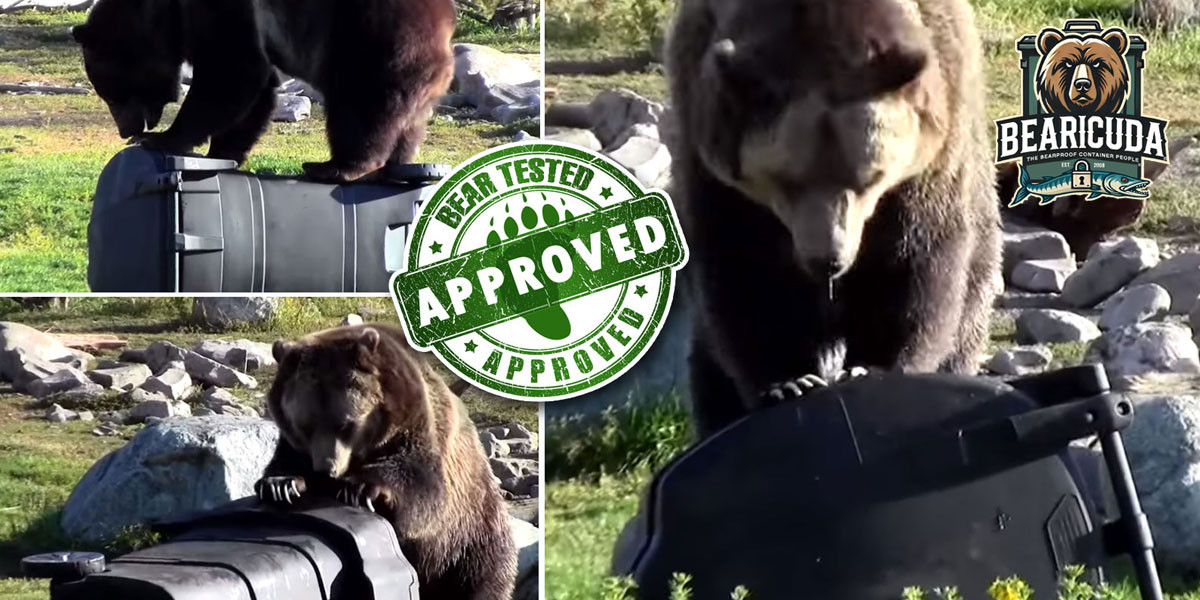
- Grizzlies and black bears use biting, clawing, rolling, jumping, and body weight to defeat containers.
- They learn quickly and pass behaviors through repeated exposure.
Bears have exceptional sense of smell
- Bears can detect food odors over long distances — containers do not eliminate smell; they prevent access.
The “food reward” problem
If a bear receives food once, it is likely to repeat the behavior:
- Increased property damage
- Aggressive encounters
- Long-term wildlife management problems
Science insight:
Effective containers do not rely on stopping smell — they rely on removing the reward cycle.
2 What “Bear-Resistant” Actually Means (Industry Definition)
Many consumers think “bear-proof” means unbreakable. In reality:
- No product is guaranteed bear-proof.
- Certification means the container meets minimum resistance standards under controlled testing.
Official definition (practical industry standard)
A bear-resistant container is:
- Constructed of solid, non-pliable materials
- Designed so bears cannot gain access using claws or teeth
- Capable of withstanding significant force (commonly referenced ≈ 300 foot-pounds of energy).
3 IGBC Testing — The Gold Standard
The Interagency Grizzly Bear Committee (IGBC) is the primary testing authority used across North America.
How testing works
Live bear testing
- Conducted with captive grizzly bears at research centers.
- Real animals attempt to access contents using natural behaviors.
Technical evaluation
- Used for larger heavy-duty products like dumpsters and food lockers.
Certification basics
- Products must meet specific protocol requirements.
- Only the exact tested model is certified.
- Certification does NOT guarantee zero failures.
Key engineering takeaway:
Testing is designed to simulate real-world attack patterns, not just lab force tests.
4 Materials Science: What Makes a Container Resist Bears?
1. Heavy-gauge steel
Used in dumpsters, lockers, and commercial enclosures.
Advantages:
- Resistant to bending and claw puncture
- Difficult for bears to deform
- High structural rigidity
2. Reinforced aluminum
- Lower weight for backpack and portable systems
- High strength-to-weight ratio
3. Thick molded composites & plastics
Used in certified canisters:
- Non-pliable design reduces bite purchase
- Rounded shapes prevent leverage.
4. Powder-coated finishes (professional units)
- Prevent corrosion.
- Extend structural performance in outdoor climates.
5. Critical hardware design
Engineering matters more than thickness:
- Recessed hinges
- No pry points
- Protected locking mechanisms
- Anti-leverage lid geometry
Industry truth:
Most failures happen at the lock or seam, not the wall material.
5 Proven Engineering Principles That Work
Experts consistently see success when these design rules are followed:
✔ Remove leverage points
If claws can grip an edge, failure likelihood increases dramatically.
✔ Use gravity-neutral lid designs
Top lids that resist body-weight jumps perform better.
✔ Force bears into complex motions
Two-step or multi-motion latches reduce success rates.
✔ Prevent rollover access
Rounded containers or anchored systems limit brute-force rolling.
✔ Reduce odor leakage pathways
Even small gaps encourage persistent attacks.
6 The Role of Human Factors (Often Overlooked)
Even the best container fails if:
- Not latched properly
- Overfilled
- Left open temporarily
IGBC emphasizes proper use because:
An unlocked container is not bear-resistant.
7 Different Types of Bear-Resistant Containers
Here’s how the industry categorizes them:
Backpacking Canisters
- Hard-shell cylinders
- Used in wilderness and national parks
- Designed to resist rolling and biting
- Required in many backcountry zones.
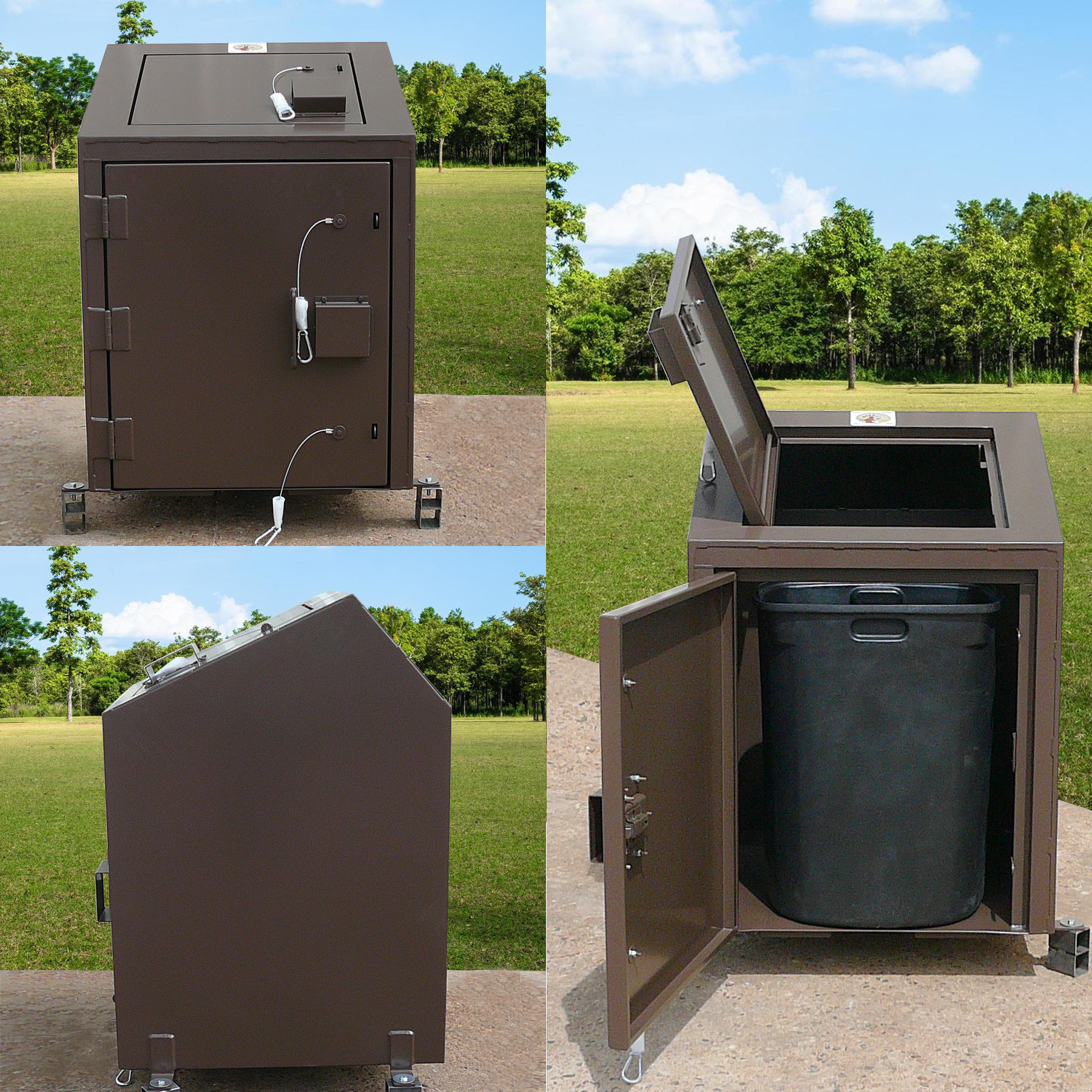
Campground Food Lockers
- Steel cabinets anchored to ground
- High-volume shared storage
- Often technically evaluated rather than live-tested.
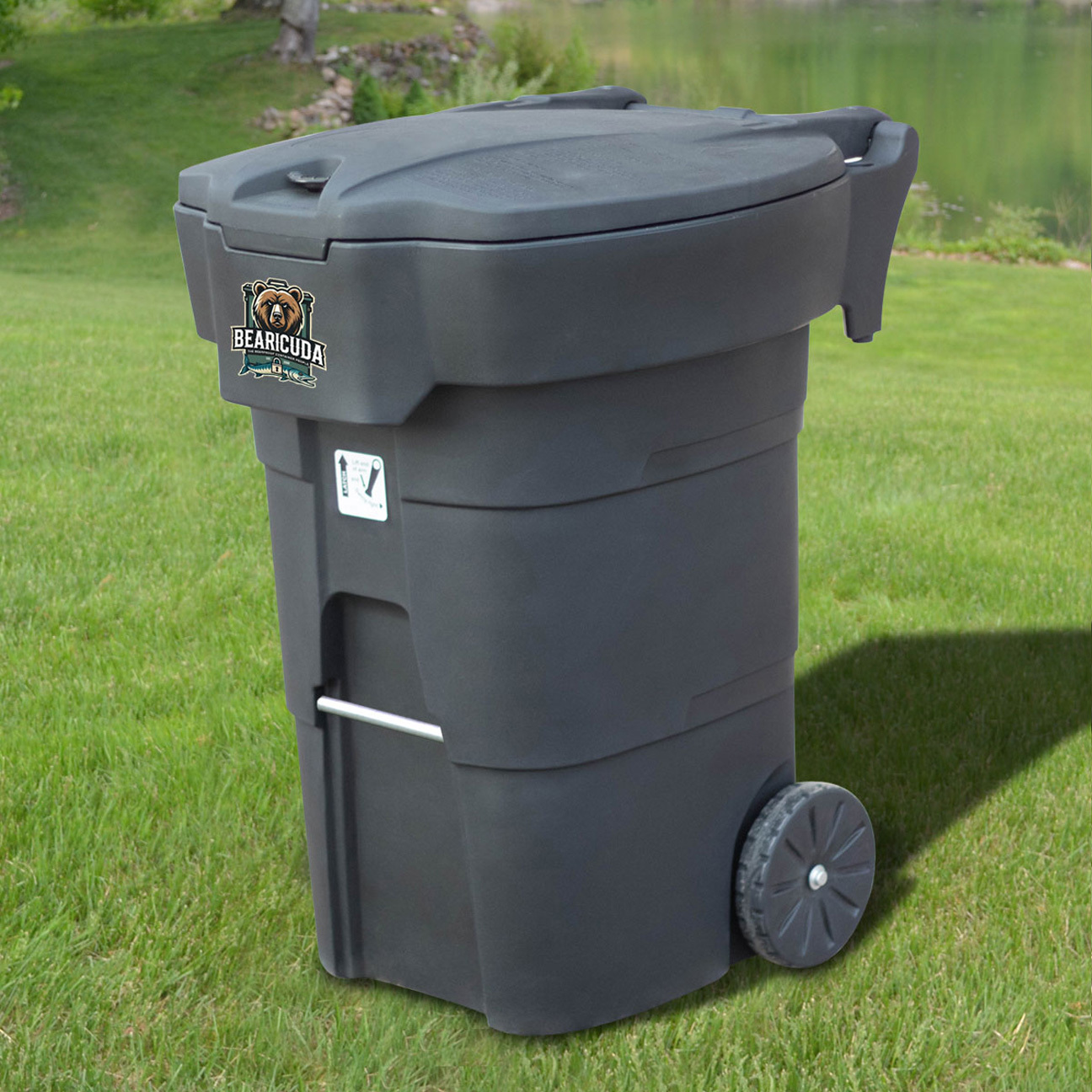
Residential Bear-Resistant Trash Cans
- Reinforced lids and locking systems
- Designed to mimic normal household use while preventing lid lifting.
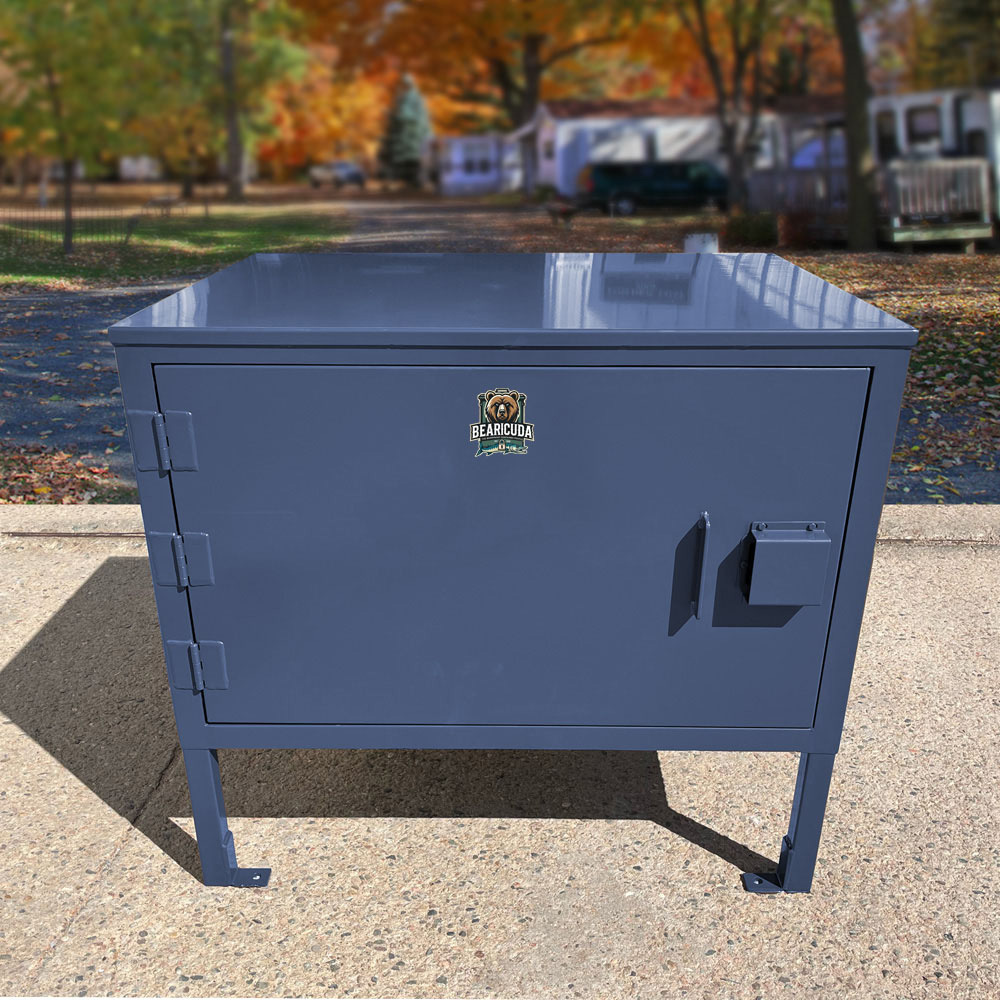
Metal Trash Enclosures
- Fully enclosed systems surrounding standard carts
- Popular in bear-active residential communities.
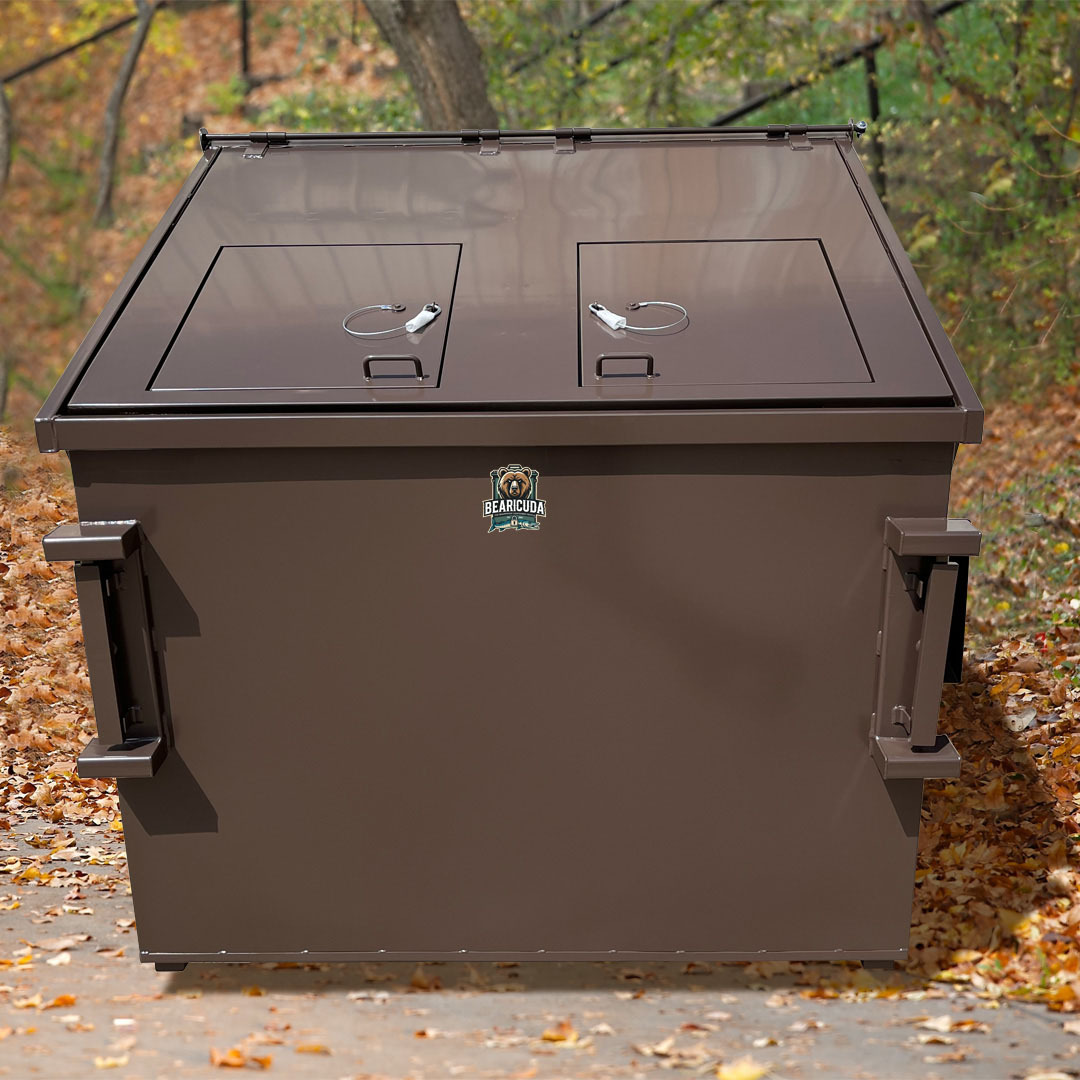
Bear-Resistant Dumpsters
- Heavy steel construction
- Gravity-locking lids or reinforced latches
- Built for commercial loads and repeated service cycles.
Food Storage Boxes & Panniers
- Metal or hard composite.
- Used for camping, rafting, and expedition environments.
8 Why Agencies Require These Containers
National parks and land managers frequently require IGBC-approved containers because:
- They reduce food conditioning.
- They lower aggressive encounters.
- They protect both visitors and wildlife.
Many regulations (e.g., 36 CFR 2.10(d)) specifically define acceptable food storage methods and approved container types.
9 Industry Expert Insight: Why Some Containers Still Fail
From decades of field design experience, failures usually come from:
- Lightweight materials marketed as “bear proof”
- Consumer locks accessible to claws
- Hinges exposed externally
- Poor welds or flexing panels
- User error (open or unlatched lids)
The best systems integrate:
- Wildlife behavior science
- Mechanical engineering
- Field feedback from real-world incidents.
Final Takeaway — The Real Science
Bear-resistant containers succeed because they apply three disciplines together:
Wildlife Biology
Understanding how bears think, move, smell, and learn.
Engineering Design
Materials + mechanics that eliminate weak points.
Behavioral Psychology
Removing rewards so bears stop trying.
When these factors align, communities see:
- Reduced bear damage
- Safer neighborhoods
- Healthier wildlife populations.