
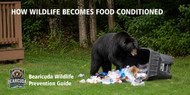
How Wildlife Becomes Food Conditioned | Bearicuda Wildlife Prevention Guide
How Wildlife Becomes Food Conditioned: Protecting Communities Through Better Waste Management
Bearicuda's Wildlife Prevention Guide
How Wildlife Becomes Food Conditioned: Protecting Communities Through Better Waste Management
Bearicuda's Wildlife Prevention Guide
One unsecured trash can can change an animal's behavior for years.
Across North America, many conflicts between people and wildlife begin when animals discover an easy meal in residential garbage, commercial dumpsters, campground trash, or pet food left outdoors. Once wildlife learns that neighborhoods and businesses provide dependable food, animals begin returning repeatedly. Wildlife biologists refer to this behavior as food conditioning.
Food-conditioned wildlife loses its natural fear of people, becomes increasingly bold, and often causes property damage while creating safety concerns for residents, businesses, parks, and campgrounds. Fortunately, these conflicts are largely preventable through responsible waste management and the use of wildlife-resistant containers.
At Bearicuda, we believe the most effective wildlife management strategy isn't relocating animals—it's preventing them from finding human food in the first place.
What Does Food Conditioned Mean?
A food-conditioned animal has learned that humans provide a reliable food source instead of relying solely on natural forage.
Common attractants include:
-
Household garbage
-
Restaurant waste
-
Commercial dumpsters
-
Campground trash
-
Pet food
-
Bird seed
-
Compost piles
-
Fallen fruit
-
Outdoor grills
-
Livestock feed
Because these food sources are calorie-rich and easy to obtain, wildlife often prefers them over searching for natural foods.
How Wildlife Learns Human Behavior
Food conditioning rarely happens overnight. It usually follows a predictable pattern.
Stage 1: Discovery
- A bear overturns an unsecured trash can.
- A raccoon opens a loose garbage lid.
- A coyote finds pet food on a porch.
- The animal discovers an easy meal.
Stage 2: Learning
- The animal remembers where the food was found and returns.
- Because wildlife has excellent memory and learns from experience, repeated success reinforces the behavior.
Stage 3: Habit
- The animal begins visiting neighborhoods, parks, or businesses regularly.
- Natural caution around humans starts to decline.
Stage 4: Food Conditioning
- The animal actively seeks developed areas because they consistently provide food.
- At this stage, property damage, nuisance complaints, and public safety concerns often increase significantly.
Wildlife Most Commonly Affected
Although bears receive the most attention, many animal species become food conditioned.
Bears
With an extraordinary sense of smell, bears can detect food from long distances. Once they access garbage successfully, they frequently return to the same location.
Raccoons
Highly intelligent and remarkably dexterous, raccoons quickly learn how to open unsecured trash containers and often teach their offspring where food can be found.
Coyotes
Coyotes increasingly enter suburban neighborhoods after discovering garbage, pet food, compost, and other easy meals.
Foxes, Rodents, and Birds
Foxes, squirrels, rats, ravens, crows, and other wildlife also adapt quickly to human food sources, increasing nuisance activity around homes and businesses.
Why Food Conditioning Is Dangerous
Food conditioning affects both people and wildlife.
Increased Property Damage
Wildlife searching for food often damages:
-
Trash cans
-
Dumpster lids
-
Wooden fences
-
Garage doors
-
Vehicles
-
Landscaping
Replacing damaged property can become expensive, particularly in communities with frequent wildlife activity.
Greater Risk to Public Safety
- Animals accustomed to finding food near people become less fearful and more comfortable around homes, schools, parks, and businesses.
- While most wildlife prefers to avoid confrontation, repeated human interaction increases the likelihood of dangerous encounters.
Poor Outcomes for Wildlife
- When animals repeatedly seek human food, wildlife agencies may be forced to relocate them. Unfortunately, relocation is not always successful, and in some situations, animals that pose ongoing public safety risks may ultimately be euthanized.
- Preventing food conditioning helps protect wildlife just as much as it protects people.
Common Mistakes That Encourage Wildlife
Many wildlife encounters begin with simple, preventable mistakes.
Leaving Trash Outside Overnight
- Garbage placed at the curb the evening before pickup provides wildlife with hours to search for food.
- Better practice: Put trash out on collection morning whenever possible.
Using Standard Trash Containers
- Many residential carts are designed for waste collection—not wildlife resistance.
- Better practice: Use wildlife-resistant trash containers or secure carts inside bear-resistant enclosures.
Feeding Wildlife
- Intentional feeding encourages animals to associate humans with food.
- Better practice: Never feed wildlife intentionally.
Leaving Pet Food Outdoors
- Pet food attracts bears, raccoons, coyotes, skunks, rodents, and other animals.
- Better practice: Feed pets indoors or remove food immediately after use.
Overflowing Commercial Dumpsters
- Restaurants, apartment complexes, schools, and parks generate food waste that can quickly attract wildlife if dumpsters remain open or damaged.
- Better practice: Keep lids closed, repair damaged containers promptly, and install wildlife-resistant dumpsters where wildlife conflicts occur.
Practical Wildlife Prevention Strategies
Reducing wildlife conflicts begins by removing the reward.
Secure Residential Waste
Homeowners should:
-
Store trash inside until collection day
-
Keep lids securely closed
-
Clean containers regularly
-
Eliminate unnecessary food odors
-
Remove fallen fruit from trees
Improve Commercial Waste Management
Businesses should:
-
Keep dumpster lids closed
-
Schedule regular waste collection
-
Clean dumpster areas frequently
-
Train employees to avoid leaving food waste outside
Practice Responsible Camping
Campers should always:
-
Store food securely
-
Clean cooking areas immediately
-
Use designated food storage lockers
-
Never leave coolers unattended overnight
How Bearicuda Helps Prevent Wildlife Conflicts
Wildlife cannot become food conditioned if food remains inaccessible.
That simple principle drives every Bearicuda product.
Our products are designed to help homeowners, businesses, municipalities, parks, campgrounds, schools, and commercial facilities reduce wildlife access to garbage while supporting long-term coexistence between people and wildlife.
Wildlife-Resistant Trash Cans
Bearicuda wildlife-resistant trash cans help homeowners secure household garbage in areas where bears, raccoons, coyotes, and other nuisance wildlife are common.
Ideal for:
-
Residential neighborhoods
-
Mountain communities
-
Rural homes
-
Vacation properties
-
HOAs
Bear-Resistant Metal Enclosures
Metal enclosures provide an additional level of protection by securing standard residential carts behind heavy-duty steel construction.
They're an excellent solution for neighborhoods and businesses requiring enhanced wildlife protection without changing waste collection procedures.
Bear-Resistant Commercial Dumpsters
Commercial food waste often attracts the largest concentration of wildlife activity.
Bearicuda's bear-resistant dumpsters are designed for:
-
National parks
-
Campgrounds
-
Resorts
-
Restaurants
-
Schools
-
Municipal facilities
-
Apartment communities
By preventing access to waste, these systems reduce cleanup costs, property damage, and repeat wildlife visits.
Wildlife Food Storage Lockers
Food lockers help campers safely store coolers and food supplies while reducing wildlife encounters in parks and recreation areas.
Why Prevention Works
Wildlife professionals consistently agree that prevention is the most effective long-term strategy for reducing human-wildlife conflicts.
When communities eliminate food rewards, wildlife naturally spends less time searching neighborhoods and more time relying on natural food sources.
Communities that invest in wildlife-resistant waste systems often experience:
-
Fewer nuisance wildlife complaints
-
Reduced property damage
-
Improved public safety
-
Cleaner parks and neighborhoods
-
Lower maintenance costs
-
Better protection for wildlife populations
Preventing food conditioning benefits everyone.
Frequently Asked Questions
Can wildlife remember food locations?
Yes. Bears, raccoons, coyotes, and many other species have excellent memories and often return to locations where they previously found food.
Are wildlife-resistant containers worth the investment?
In areas with recurring wildlife activity, preventing property damage, cleanup expenses, and wildlife conflicts often makes secure containers a cost-effective long-term solution.
Does food conditioning only affect bears?
No. Raccoons, coyotes, foxes, rodents, ravens, crows, skunks, and many other species readily adapt to human food sources.
Final thoughts About food conditioned animals
Wildlife becomes food conditioned because people unintentionally make food available. Every unsecured trash can, overflowing dumpster, or bag of pet food left outdoors teaches animals that human environments offer an easy meal.
The good news is that this cycle can be broken.
By securing waste, eliminating food attractants, and using wildlife-resistant trash cans, metal enclosures, commercial dumpsters, and food storage lockers, homeowners, businesses, municipalities, and park managers can dramatically reduce wildlife conflicts while protecting both people and animals.
At Bearicuda, we believe effective wildlife management starts with prevention. Our mission is to help communities keep wildlife wild by designing durable, wildlife-resistant waste containment solutions that reduce attractants, protect property, and promote safe coexistence for generations to come.